
Marketing directors at small and medium-sized businesses face a persistent challenge: developing innovative ad strategies that actually move the ROI needle. Traditional approaches often miss the mark, leaving campaigns underperforming and budgets stretched thin. The solution lies in a structured creative ad strategy process that balances innovation with execution discipline. This guide walks you through a proven framework from initial preparation through final verification, equipping you with actionable tactics to transform your digital advertising effectiveness and deliver measurable results for your business.
Table of Contents
- Key takeaways
- Understanding the problem: why SMBs need creative ad strategies
- Preparation: establishing foundation and generating innovative ad concepts
- Execution: producing and testing innovative ads efficiently
- Verification: measuring results and refining your ad strategy
- Boost your creative ad strategy with expert help
- Frequently asked questions about creative ad strategy process
Key Takeaways
| Point | Details |
|---|---|
| Creative strategy balance | Creative ad strategies succeed when innovation is paired with disciplined processes and execution. |
| Define target personas | Preparation should establish detailed target personas that capture motivations, pain points, and decision triggers to guide all creative choices. |
| Clear campaign objectives | Set specific campaign objectives tied to measurable business outcomes rather than vanity metrics to guide ideation and verification benchmarks. |
| Rapid low budget execution | Execution emphasizes rapid, low budget content creation techniques that maintain quality and scale. |
| Continuous testing and optimization | Verification involves continuous testing and optimization to maximize impact over time. |
Understanding the problem: why SMBs need creative ad strategies
Traditional manual ad methods drain resources without delivering proportional results for small and medium-sized businesses. You invest hours crafting campaigns, only to watch competitors with bigger budgets dominate your market. The fundamental issue isn't budget size but strategic approach. SMBs benefit from focusing on persona foundations before amplification, yet many skip this critical step in their rush to launch campaigns.
Your advertising effectiveness hinges on three foundational elements. First, clearly defined target personas that go beyond basic demographics to capture motivations, pain points, and decision-making patterns. Second, specific campaign goals tied to business outcomes rather than vanity metrics. Third, a balance between AI-driven scale and authentic brand voice that resonates with your audience.
The role of Google Ads for SMBs extends beyond simple visibility. You need campaigns that convert browsers into buyers, turning ad spend into revenue growth. This requires creative strategies that stand out in saturated digital spaces where audiences scroll past generic messaging without a second glance.
Common challenges compound the problem:
- Limited budgets force difficult choices between reach and frequency
- Small teams lack specialized creative resources for constant content production
- Rapid platform changes outpace internal knowledge development
- Performance pressure demands immediate results without time for experimentation
The most successful SMB campaigns don't try to outspend competitors. They out-think them with creative approaches that maximize every dollar invested.
Understanding these obstacles prepares you to apply innovative solutions. The creative ad strategy process addresses each challenge systematically, transforming constraints into competitive advantages through structured preparation, efficient execution, and continuous refinement.
Preparation: establishing foundation and generating innovative ad concepts
Solid preparation separates campaigns that deliver from those that drain budgets. Start by documenting detailed target personas that capture not just who your customers are, but why they buy. Include their primary challenges, preferred content formats, typical objections, and decision triggers. This foundation informs every creative choice you make downstream.
Next, establish specific campaign objectives tied to measurable business outcomes. Revenue targets, lead volume goals, or conversion rate improvements work better than vague aims like "increase awareness." Clear objectives guide your creative ideation and provide benchmarks for verification later.
Practical ad techniques for SMBs include three powerful ideation methods that spark creativity without requiring massive resources:
-
Typographic ads use bold text treatments and minimal design elements to communicate core messages instantly. This approach cuts production time while creating visually distinctive content that stops scrollers.
-
Square Storming generates volume through rapid iteration. Set a timer for 15 minutes and sketch 20+ rough concept squares, forcing quantity over quality initially. This technique bypasses perfectionism and uncovers unexpected angles.
-
ChatGPT mind mapping leverages AI to explore concept variations. Prompt the tool with your core message and persona details, then request 10 different angle approaches. Use Rhymezone to add memorable headline twists that stick in minds.
Pro Tip: Combine multiple ideation methods in single sessions. Start with Square Storming for volume, then refine promising concepts using AI mind mapping, and finally apply typographic treatments to your top three ideas.
Different ideation approaches suit different situations:
| Method | Speed | Creativity Boost | Resources Needed | Best For |
|---|---|---|---|---|
| Typographic Ads | Fast | Medium | Design tool only | Direct response campaigns |
| Square Storming | Very Fast | High | Paper and timer | Initial concept generation |
| ChatGPT Mind Mapping | Fast | Very High | AI access | Exploring message angles |
| Traditional Brainstorming | Slow | Medium | Team time | Collaborative refinement |
The preparation phase also includes competitive analysis. Review what messaging approaches dominate your space, then deliberately choose different angles. If competitors emphasize features, you highlight outcomes. When others use corporate tones, you adopt conversational voices.

Scaling advertising campaigns requires creative concepts that work across channels. Design your initial ideas with multi-platform adaptation in mind. A strong core concept translates from static image to video to carousel format without losing impact.
Study examples of digital ad campaigns from adjacent industries for fresh inspiration. Direct application rarely works, but adapted principles spark innovation. A B2C retention tactic might inspire your B2B lead nurture approach when translated thoughtfully.
External creative design tips apply equally to digital ads. Hierarchy, contrast, and white space principles create thumb-stopping creative regardless of format. Apply these fundamentals even when working with minimal design resources.
Document your top concepts in a simple creative brief format. Include the core message, target persona, primary objection addressed, and desired action. This brief guides execution while maintaining strategic alignment throughout production.
Execution: producing and testing innovative ads efficiently
Efficient execution transforms concepts into live campaigns without burning through budgets. Low-budget execution includes scripting with visual and audio columns, minimal office shoots, and collaborative editing that accelerates timelines dramatically.
Start with detailed scripts for each ad concept:
- Create two-column formats with visual descriptions on the left and corresponding audio or text on the right
- Write multiple script variations for A/B testing, changing hooks, body copy, or calls to action
- Use AI prompts to generate script alternatives, then refine the most promising options
- Keep scripts tight, aiming for 15-30 second spots that deliver single focused messages
- Include specific visual cues that guide shooting without requiring storyboard artists
Production doesn't demand professional studios. Your office environment provides authentic backdrops that build credibility with SMB audiences. Natural lighting near windows, simple backgrounds, and smartphone cameras deliver quality sufficient for digital platforms where viewers watch on mobile devices anyway.
Collaborative editing speeds the process:
- Share rough cuts immediately for feedback rather than waiting for polish
- Use cloud-based editing tools that allow simultaneous review and comments
- Set tight revision cycles with specific turnaround times to maintain momentum
- Focus edits on message clarity over production perfection
The digital ad campaign guide emphasizes testing velocity over individual ad perfection. You learn faster by running multiple variations than by endlessly refining single executions.
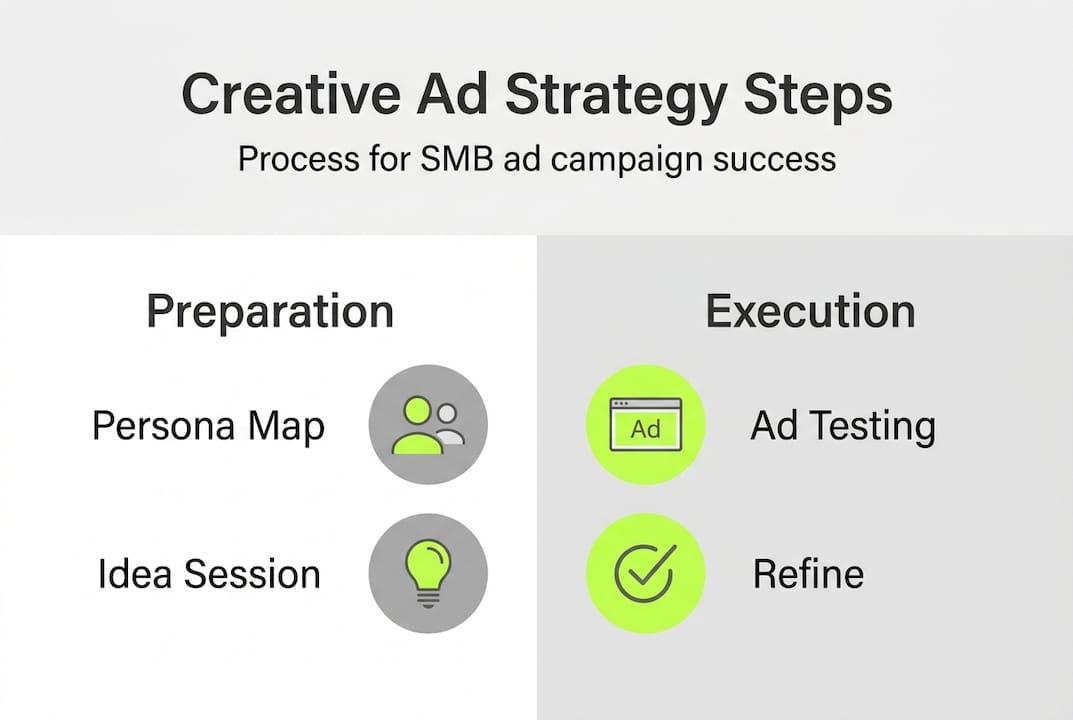
Two testing approaches serve different objectives:
| Approach | Pros | Cons | Best For |
|---|---|---|---|
| High-Velocity Volume | Rapid learning, broad exploration, statistical significance | Requires more creative production, harder to track | Early campaign phases, large audiences |
| Manual Testing | Deep insights, controlled variables, easier attribution | Slower learning, limited scale, potential bias | Mature campaigns, niche audiences |
Follow step by step ad setup protocols to ensure technical accuracy. Small configuration errors waste budgets on misaligned audiences or broken tracking. Double-check pixel implementation, audience targeting parameters, and conversion event definitions before launch.
Test micro ads against long-form content based on campaign goals. Awareness objectives often benefit from longer storytelling formats, while direct response campaigns perform better with concise, action-focused messages. Run both formats simultaneously to gather performance data rather than assuming one approach wins universally.
Pro Tip: Create ad variations systematically by changing one element at a time. Test three hook variations with identical body copy, then test body copy variations using the winning hook. This isolation reveals which specific elements drive performance improvements.
Digital ad spend management during execution requires daily monitoring initially. Watch for technical issues, audience saturation, or unexpected performance patterns. After campaigns stabilize, shift to weekly optimization cycles that balance responsiveness with strategic patience.
Common execution pitfalls to avoid:
- Launching campaigns without backup creative ready when initial ads fatigue
- Setting budgets too low to achieve statistical significance in testing
- Making multiple simultaneous changes that obscure which adjustments drove results
- Stopping winning ads prematurely based on personal preferences rather than data
- Ignoring mobile-specific optimization when mobile drives majority traffic
Maintain a production pipeline that feeds campaigns continuously. While current ads run, develop next iterations based on emerging performance insights. This pipeline approach prevents the feast or famine cycle where campaigns pause while you scramble to create new content.
Verification: measuring results and refining your ad strategy
Verification transforms raw campaign data into strategic insights that compound performance over time. You need systematic approaches to measurement that reveal not just what happened, but why it happened and how to improve.
Track key performance indicators aligned with your original campaign objectives. Revenue-focused campaigns demand ROAS (return on ad spend) and customer acquisition cost metrics. Lead generation efforts require cost per lead and lead quality scores. Brand awareness initiatives measure reach, frequency, and engagement rates. Mixing objectives with mismatched metrics creates confusion and poor optimization decisions.
Data-driven optimization follows a continuous cycle:
- Collect performance data across all campaign elements (creative, audience, placement, timing)
- Identify patterns in top and bottom performers to understand success drivers
- Form hypotheses about improvements based on observed patterns
- Implement changes systematically, isolating variables for clear attribution
- Measure results against benchmarks to validate or reject hypotheses
The contrasts between AI scale and human brand depth require careful balance. Automated bidding and audience expansion deliver efficiency, but blind automation risks diluting brand voice or targeting unprofitable segments. Set guardrails on automation: maximum cost thresholds, audience exclusions, and brand safety parameters that protect strategic alignment while capturing scale benefits.
Continuous testing drives sustained improvement. Your first campaign version rarely represents optimal performance. Plan testing roadmaps that systematically explore creative angles, audience segments, offer structures, and landing page variations. Each test builds knowledge that informs subsequent iterations.
Pro Tip: Create a simple testing log that documents what you tested, why you tested it, results observed, and implications for future campaigns. This knowledge base prevents repeating failed experiments and accelerates team learning over time.
Optimizing ad campaigns for ROI requires looking beyond platform metrics to business outcomes. A campaign with impressive click-through rates but poor conversion rates wastes money attracting wrong-fit prospects. Connect advertising data to CRM and sales systems for complete funnel visibility.
Brand authenticity suffers when optimization focuses purely on performance metrics. Monitor qualitative signals alongside quantitative data:
- Review ad comments and direct messages for audience sentiment
- Survey customers about how they discovered you and what messaging resonated
- Compare brand search volume trends as campaigns scale
- Assess whether acquired customers match ideal customer profiles
Tools that streamline verification include:
- Dashboard software that consolidates multi-platform data for unified reporting
- Attribution modeling that credits touchpoints appropriately across customer journeys
- Automated alert systems that flag significant performance changes requiring investigation
- A/B testing platforms with statistical significance calculators that prevent premature conclusions
Refinement never stops. Markets shift, competitors adjust, and audience preferences evolve. Allocate 10-20% of budgets to ongoing experimentation that explores new approaches even when current campaigns perform well. This experimentation budget provides insurance against performance plateaus and discovers breakthrough improvements.
Balance short-term optimization with long-term strategy. Chasing immediate efficiency gains sometimes sacrifices sustainable growth. Invest in brand-building creative that may show lower direct response metrics initially but compounds value over extended periods through increased consideration and preference.
Boost your creative ad strategy with expert help
Executing this complete creative ad strategy process demands time, expertise, and constant attention that stretches small marketing teams thin. Professional performance marketing specialists accelerate your results by bringing deep platform knowledge, creative resources, and optimization experience across hundreds of campaigns.
Multi-channel paid advertising requires coordinating strategy across Google Ads, Meta platforms, and emerging channels while maintaining consistent messaging and efficient budget allocation. Expert teams handle this complexity daily, freeing you to focus on business operations while campaigns deliver measurable ROI improvements. When you partner with specialists for Google Ads management services, you gain access to proven frameworks, testing methodologies, and creative production capabilities that would take years to build internally.
Frequently asked questions about creative ad strategy process
What are quick ideation techniques for creative ads?
Square Storming generates 20+ concepts in 15 minutes by forcing rapid sketching without perfectionism. ChatGPT mind mapping explores message angles by prompting AI with persona details and requesting varied approaches. Typographic ads use bold text treatments with minimal design to create distinctive content fast.
How can SMBs produce ads on a low budget effectively?
Script ads using two-column visual and audio formats, shoot in office environments with natural lighting and smartphones, and collaborate on quick editing cycles through cloud tools. Focus on message clarity over production perfection since mobile viewing dominates digital platforms. Maintain a content pipeline that feeds campaigns continuously without expensive studio sessions.
Why is defining target personas critical before campaign launch?
Detailed personas guide every creative decision from messaging angles to visual treatments and channel selection. They reveal motivations, pain points, and decision triggers that generic demographics miss. Campaigns built on solid persona foundations convert better because they address specific audience needs rather than broadcasting generic messages that fail to resonate.
How do I balance AI automation with brand authenticity?
Set guardrails on automation including maximum cost thresholds, audience exclusions, and brand safety parameters that protect strategic alignment. Monitor qualitative signals like ad comments, customer surveys, and brand search trends alongside quantitative metrics. Allocate human oversight to creative development and strategic decisions while letting AI handle bidding and placement optimization.
What metrics best measure ad strategy success?
Align metrics with campaign objectives: ROAS and customer acquisition cost for revenue goals, cost per lead and lead quality scores for lead generation, reach and engagement rates for awareness. Connect advertising data to CRM and sales systems for complete funnel visibility beyond platform metrics. Track business outcomes, not just advertising activity, to assess true strategic success.