
TL;DR:
- Google Ads offers an 8:1 ROI, outperforming traditional marketing channels with measurable real-time data.
- Its pay-per-click model provides CEOs with flexible, scalable budgets and precise audience targeting.
- High-intent Google search traffic delivers rapid leads, making it ideal for quick revenue growth and detailed analytics.
Every CEO faces the same pressure: allocate limited marketing dollars to channels that actually move revenue. Not vanity metrics. Not impressions. Real, measurable growth. Google Ads has consistently proven itself as one of the highest-performing paid channels available, delivering an average 8:1 ROI for businesses of all sizes. That means $8 back for every $1 spent. For CEOs running small to medium-sized businesses, that kind of return changes the conversation entirely. This article breaks down the top Google Ads advantages you need to understand, not as a technical overview, but as a strategic decision-making guide built for leaders focused on real growth.
Table of Contents
- ROI that justifies investment
- Flexible budgets with pay-per-click control
- Instant access to high-intent customers
- Leveling the field with detailed analytics
- A CEO's perspective: Beyond the Google Ads hype
- Unlock your advantage with expert Google Ads strategy
- Frequently asked questions
Key Takeaways
| Point | Details |
|---|---|
| Industry-leading ROI | Google Ads delivers an average 8:1 return on investment for businesses of all sizes. |
| Flexible ad spending | CEOs can start with budgets as low as $10 per day and scale based on results, minimizing risk. |
| High-intent lead generation | The platform targets ready-to-buy customers, resulting in faster and higher quality leads. |
| Data-driven growth | Advanced analytics let CEOs measure, optimize, and compete with larger brands effectively. |
ROI that justifies investment
With budget accountability top of mind, it's crucial for CEOs to see how Google Ads returns stack up to alternatives.
The headline number is hard to ignore. Google Ads delivers 8:1 ROI on average, meaning small businesses consistently earn $8 for every $1 invested. That outperforms most traditional marketing channels by a wide margin. But ROI is only meaningful when you know how to measure it, and that's where many CEOs fall short.
How Google Ads ROI compares to traditional marketing:
| Channel | Average ROI | Measurability | Speed to results |
|---|---|---|---|
| Google Ads | 8:1 | High (real-time) | Days |
| TV/Radio | 1.5:1 to 3:1 | Low | Weeks to months |
| Print advertising | 1:1 to 2:1 | Very low | Months |
| Direct mail | 2:1 to 4:1 | Medium | Weeks |
The gap is significant. Traditional channels require large upfront commitments with limited feedback. Google Ads gives you detailed analytics to track every ad dollar to revenue, in real time.
Key ways to measure Google Ads ROI as a CEO:
- Revenue tracking: Connect Google Ads to your CRM or e-commerce platform to see direct sales impact.
- Lead attribution: Know exactly which campaigns generate qualified leads, not just clicks.
- ROAS (return on ad spend): This tells you the direct revenue generated per dollar spent on ads. Track it weekly.
- Campaign-level reporting: Break performance down by keyword, audience, and ad group to cut waste fast.
- Cost per acquisition (CPA): Understand what it costs to win one customer, then optimize toward that number.
CEOs focused on maximizing ROI for SMBs should prioritize ROAS over traffic volume. Traffic is a vanity metric. Revenue per dollar spent is the metric that drives decisions. For B2B companies especially, full-funnel tracking matters. A lead today may convert 60 days from now. Your analytics need to account for that lag, or you'll misread your results entirely. Understanding the Google Ads role in small business growth starts with treating data as your most valuable asset.
Flexible budgets with pay-per-click control
Beyond proven ROI, controlling and scaling your investment matters as much as the returns themselves.
The pay-per-click (PPC) model is one of Google Ads' most underappreciated advantages. You only pay when someone clicks your ad. Not when they see it. Not when they scroll past it. That distinction matters enormously for CEOs managing tight budgets. Budget control starts at $10/day, and you can pause, increase, or redirect spend at any time.
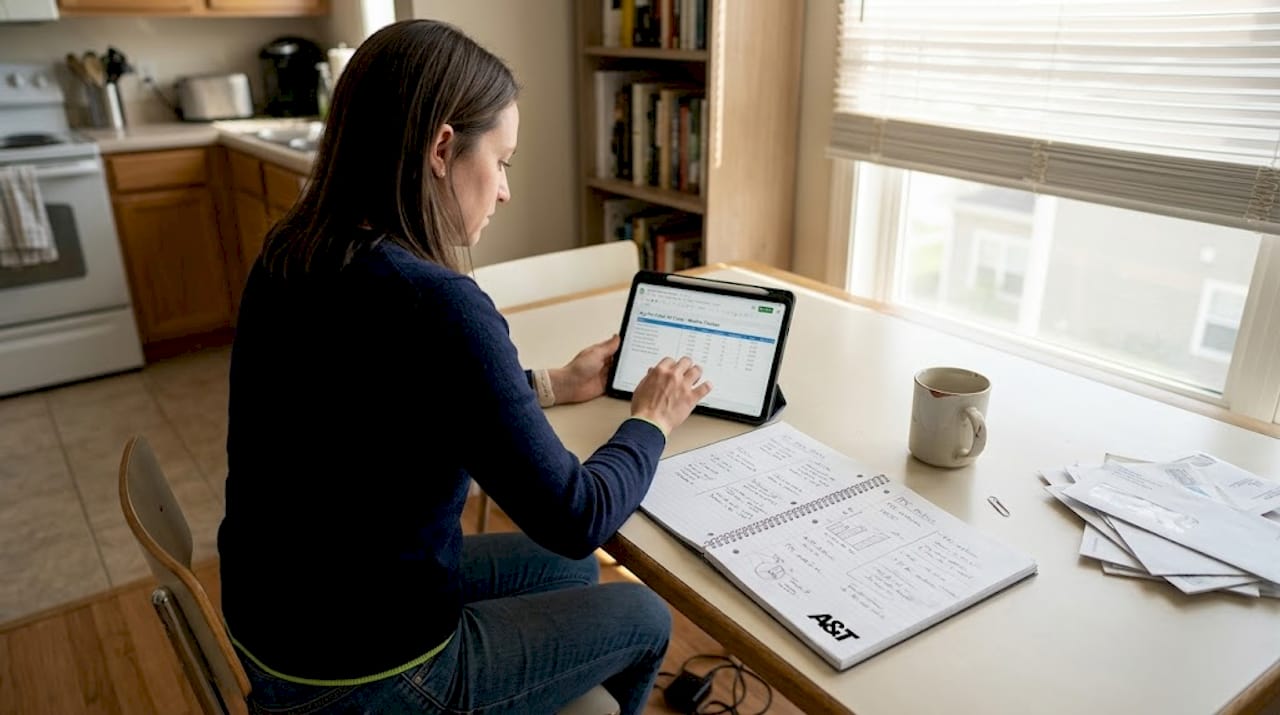
Google Ads vs. traditional media: Budget flexibility comparison
| Feature | Google Ads | Traditional media |
|---|---|---|
| Minimum spend | $10/day | Often $1,000+ upfront |
| Pause/stop anytime | Yes | No (contracts) |
| Real-time adjustments | Yes | No |
| Pay for engagement | Yes (clicks only) | No (pay for exposure) |
| Audience targeting | Precise | Broad |
This level of control is something traditional media simply cannot offer. A billboard contract locks you in for months. A Google Ads campaign can be paused before lunch if the data tells you to.
What CEOs can adjust in real time:
- Daily and monthly budget caps
- Geographic targeting (city, radius, zip code)
- Audience segments and demographic filters
- Keyword bids based on performance
- Ad scheduling (run ads only when your team can respond)
Pro Tip: Test a new market or product line for as little as $10 a day for two weeks. You'll gather real conversion data before committing a significant budget. That's a level of market research most traditional channels can't touch.
Scaling up isn't a leap of faith with Google Ads. It's a calculated move based on actual performance data. When a campaign proves itself at $500/month, increasing to $2,000/month is a data-backed decision, not a gamble. Explore Google Ads budget management strategies to build a system that scales with your business. Pairing smart budget control with digital ad spend management practices ensures you're never spending blind.
Instant access to high-intent customers
Once you can control your spend, the next advantage is seeing leads and revenue show up quickly.
Not all website traffic is equal. Someone browsing social media is in a different mindset than someone typing "emergency HVAC repair near me" into Google. That second person is ready to act. High-intent traffic refers to users actively searching for a solution, product, or service right now. Google Ads puts your business in front of them at exactly that moment.
The numbers back this up. 76% of nearby searchers who click an ad visit a business within 24 hours. That's not a delayed consideration. That's immediate conversion potential.
Steps to use location targeting for immediate results:
- Define your service area by city, zip code, or a radius around your location.
- Build keyword lists around high-intent phrases ("buy," "near me," "same day," "best [service] in [city]").
- Set bid adjustments to prioritize users within your most profitable zones.
- Create ad copy that speaks directly to urgency and local relevance.
- Connect your ads to a landing page built for conversion, not general browsing.
Pro Tip: Combine high-intent keywords with geo-targeting to fill your pipeline faster. A campaign targeting "corporate catering Chicago" with a $50/day budget will outperform a broad national campaign at $500/day. Precision beats volume every time.
For CEOs, the speed advantage is critical. SEO takes months to build. Cold outreach is slow and unpredictable. Google Ads can generate qualified leads within days of launch. If you're focused on driving rapid revenue growth, this platform aligns with that urgency in a way few channels can match.
Leveling the field with detailed analytics
Driving revenue is one part, but CEOs need the tools for constant learning and improvement to win long term.
One of the most powerful, and least discussed, advantages of Google Ads is what it teaches you. Every campaign generates data. Click-through rates, conversion rates, cost per lead, audience behavior. This data doesn't just measure performance. It informs your entire marketing strategy.
Detailed analytics allow measurable growth and prioritize conversion efficiency over raw traffic. That's a shift in mindset that separates CEOs who scale from those who plateau.
Key analytics every CEO should monitor:
- Conversions: The number of leads, sales, or sign-ups generated by your ads.
- Cost per lead (CPL): What you pay to acquire one qualified prospect.
- ROAS: Revenue generated per dollar of ad spend.
- Impression share: How often your ads appear versus competitors in your target market.
- Quality score: Google's rating of your ad relevance. Higher scores mean lower costs.
- Attribution path: Which touchpoints contributed to a conversion, especially for longer sales cycles.
"Stop optimizing for traffic. Start optimizing for conversion efficiency. The CEO who knows their cost per qualified lead owns their market."
For B2B businesses, this gets more nuanced. Direct correlation may appear negative without lagged analytics. A lead generated in January may not close until March. If you're only looking at 30-day windows, you'll undervalue your campaigns and cut spend prematurely. Full-funnel tracking solves this.
Small businesses can now access the same analytical depth as Fortune 500 companies. That's a genuine competitive advantage. Focus on optimizing campaigns for lead quality and you'll consistently outperform competitors who only watch impressions. Use those insights to keep scaling Google Ads ROI quarter over quarter.
A CEO's perspective: Beyond the Google Ads hype
With all the advantages on the table, here's the seasoned advice CEOs rarely see in generic guides.
We've worked with enough SMBs to know where the real mistakes happen. It's rarely the platform. It's the mindset going in.
The most common CEO mistake? Chasing traffic instead of conversions. More clicks feel like progress. They're not. A campaign generating 1,000 clicks and 2 leads is worse than one generating 100 clicks and 15 leads. Efficiency wins, not volume.
Here's the uncomfortable truth: Google Ads ROI is real, but it requires patient analytics and full-funnel thinking. Especially for B2B. If you cut a campaign after two weeks because leads haven't closed yet, you're making a decision based on incomplete data. The businesses we see scale consistently are the ones who commit to 60 to 90 days of data before making major strategic shifts.
The contrarian view worth hearing: sometimes spending less, but more strategically, outperforms outspending the competition. We've seen campaigns for retail sales with Google Ads where cutting 40% of the budget and focusing on the top-performing keywords doubled the ROAS. Less noise, more signal.
Pro Tip: Assign a team member or partner agency that understands measurable growth, not just platform mechanics. Knowing how to run ads and knowing how to grow a business through ads are two very different skill sets.
Unlock your advantage with expert Google Ads strategy
Ready to turn Google Ads into a strategic growth engine? Here's how you can get expert support.
At AT Digi Agency, we help CEOs move from guesswork to growth. Every advantage outlined in this guide, ROI accountability, budget control, high-intent targeting, and data-driven optimization, is built into how we run campaigns. We specialize in Google Ads management solutions and Meta Ads management, giving your business a multi-channel paid advertising system designed to scale. No unnecessary meetings. No generic strategies. Just purposeful ad spend that delivers measurable results. If you're serious about growth, let's build the system that gets you there.
Frequently asked questions
How much should a CEO budget for Google Ads each month?
Many SMBs see meaningful results starting with budgets as low as $300/month, thanks to the pay-per-click model that allows daily budget control from $10/day. The right number depends on your industry, competition, and revenue goals.
How quickly can Google Ads generate leads or sales?
CEOs can see quality leads within days of launch, particularly when targeting high-intent searchers with local and keyword-specific campaigns. The 76% same-day visit rate for nearby searchers underscores just how fast this channel can move.
What analytics matter most to CEOs using Google Ads?
Return on ad spend (ROAS), cost per lead, and conversion rates are the core metrics for strategic decisions. Prioritizing conversion efficiency over traffic volume is what separates campaigns that scale from those that stall.
Is Google Ads better than social media ads for B2B companies?
Google Ads often delivers faster, more actionable leads for B2B CEOs, but full-funnel tracking is essential because B2B sales cycles are longer and direct attribution can be misleading without lagged analytics.
Recommended
- Performance Marketing Team | Multi‑Channel Paid Ads
- Why targeted ad spend matters: boost ROI and fuel growth
- Performance Marketing Team | Multi‑Channel Paid Ads
- Performance Marketing Team | Multi‑Channel Paid Ads
- 7 Vorteile von Google Ads für Selbststeuerung im Marketing - Hyped Performance Marketing Agentur