
TL;DR:
- Relying solely on Google Ads for US paid media limits growth potential because alternative platforms offer unique advantages.
- Successful advertisers treat these channels as a coordinated system, aligning each platform's strengths with funnel stages.
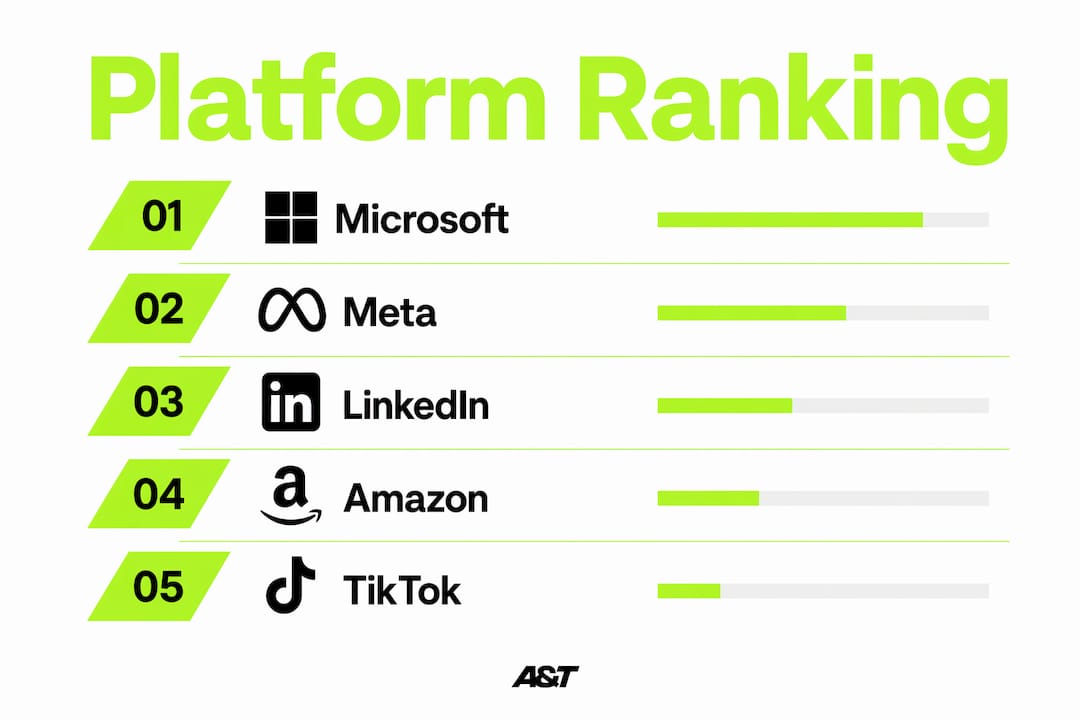
If you're running paid advertising in the US and relying solely on Google Ads, you're leaving real money on the table. The strongest google.com alternatives for US businesses right now are:
- Microsoft Advertising — search intent capture at lower cost per click, reaching Bing, Yahoo, and DuckDuckGo
- Meta Ads — Facebook and Instagram, with over 2.9 billion users and unmatched behavioral targeting
- LinkedIn Ads — precision B2B targeting by job title, company, and industry
- Amazon Advertising — transactional buyers at the point of purchase, dominating retail media with nearly 80% US market share
- TikTok Ads — video-first, mobile-first, Gen Z and millennial reach with rising search ad capabilities
Beyond these five, niche platforms like Pinterest Ads, Reddit Ads, and emerging AI advertising networks are carving out meaningful roles in full-funnel strategies. No single platform replaces Google Ads outright. The businesses winning in paid media right now are the ones treating these channels as a coordinated system, not a backup plan.
Table of Contents
- What makes each Google Ads alternative worth your budget?
- How AI advertising is changing the paid media mix
- Key Takeaways
- What we've learned running multi-channel paid campaigns
What makes each Google Ads alternative worth your budget?
Each platform earns its place for different reasons. Here's what actually matters for US performance marketers.
Microsoft Advertising
Microsoft Advertising covers Bing, Yahoo, DuckDuckGo, and AOL, collectively handling substantial daily search volume. CPCs typically run lower than Google's, which makes it a smart first move for B2B brands and advertisers targeting older, higher-income demographics. The platform mirrors Google Ads' campaign structure closely, so migration is straightforward. Integration with Microsoft Clarity, LinkedIn Profile Targeting, and the broader Microsoft ecosystem gives it a B2B edge that Google simply can't match.

Pros: Lower CPC, familiar interface, LinkedIn audience data integration Cons: Smaller total search volume, less inventory for niche verticals
Meta Ads (Facebook and Instagram)
Meta Ads reach an audience Google can't touch through behavioral and interest-based targeting built on years of social data. Instagram skews toward 18–29-year-olds, while Facebook's three-billion-plus monthly active user base spans nearly every demographic. Visual storytelling, carousel ads, Reels placements, and lead generation forms make Meta a demand-generation powerhouse. For e-commerce brands and online stores, Meta often drives the awareness that Google Search later converts.
Pros: Massive reach, granular behavioral targeting, strong creative formats Cons: Requires compelling creative; cold audiences need nurturing before converting
LinkedIn Ads
A large share of LinkedIn users are key business decision-makers. That stat alone explains why LinkedIn Ads command higher CPCs than any other social platform. For B2B campaigns targeting CFOs, VPs of Marketing, or IT directors at specific company sizes, no other platform comes close on lead quality. Sponsored content, InMail, and lead gen forms work particularly well for SaaS, professional services, and healthcare verticals. The cost is real, but so is the quality of the pipeline it generates.
Pros: Unmatched B2B precision, high-intent professional audience Cons: Highest CPC of any social platform; poor fit for consumer brands
Amazon Advertising
Amazon Advertising captures buyers who have already decided to purchase. That's a fundamentally different intent signal than anything Google or Meta can offer. Sponsored Products, Sponsored Brands, and Display ads appear directly within search results and product pages, putting your brand in front of shoppers with credit cards ready. Amazon holds a dominant share of US retail media ad spend, and for brands selling physical products online, it's non-optional.
Pros: Highest purchase intent of any platform, direct path to conversion Cons: Limited to product-based businesses; brand-building capabilities are narrow
TikTok Ads
TikTok's rapid growth has made it a serious performance channel, not just a brand awareness play. TikTok Search Ads now offer PPC-style targeting within the platform's search function, complementing awareness-focused in-feed video campaigns. The audience skews younger and mobile-first, with engagement rates that outpace most other social platforms. For consumer brands, health and wellness, retail, and entertainment, TikTok delivers reach that Google simply doesn't have access to.
Pros: High engagement, growing search ad inventory, strong for Gen Z and millennials Cons: Creative demands are high; short-form video requires ongoing production investment
Pricing and integration snapshot
| Platform | Pricing model | Avg. CPC range | Key integration |
|---|---|---|---|
| Microsoft Advertising | CPC / CPM | Lower than Google | Microsoft Clarity, LinkedIn |
| Meta Ads | CPC / CPM | Varies by sector | Meta Pixel, GA4 |
| LinkedIn Ads | CPC / CPM | Highest social CPC | HubSpot, Salesforce |
| Amazon Advertising | CPC | Moderate to high | Amazon DSP, brand analytics |
| TikTok Ads | CPC / CPM | Moderate | TikTok Pixel, Shopify |
One critical point on integration: each platform uses its own pixel and conversion tracking method. Migrating without proper setup causes data gaps that make optimization nearly impossible. Getting tracking right from day one isn't optional.
How AI advertising is changing the paid media mix
AI advertising platforms place native ads inside AI-synthesized search results, targeting conversational intent rather than keywords. This is a meaningfully different approach from Google Ads' keyword auction model, and it's gaining traction fast.
Here's why it matters for your campaigns:
- Lower competition: AI ad inventory is less saturated, often costing 40–60% less than comparable Google Ads placements on a CPM basis (the average Google Ads CPC across industries is $2.69; AI advertising often comes in significantly lower).
- Conversational targeting: AI platforms capture complex, research-driven queries that don't fit neatly into keyword match types
- Top-of-funnel reach: Brands in SaaS, healthcare, and financial services benefit most, where purchase journeys are long and research-intensive
The data on traditional search behavior reinforces the urgency. A notable share of Google searches in the US ended without a click in 2024, driven partly by Google's own AI Overviews feature absorbing user attention before ads are seen. That's a structural shift, not a blip.
The average B2B purchase involves multiple touchpoints before conversion. Removing any single channel from that sequence reduces overall conversion rates. AI advertising and Google Ads work better together than either does alone.
For brands with research-intensive customer journeys, AI-driven search advertising opens inventory that keyword-based campaigns simply can't reach. The 2026 advertising trends point clearly toward AI-assisted discovery becoming a standard top-of-funnel layer, not an experiment.
The strategic play is straightforward: use AI advertising to generate demand and capture early-stage research intent, then let Google Ads and Microsoft Advertising close the loop on high-intent searches. That combination outperforms either channel running in isolation.
Key Takeaways
No single platform replaces Google Ads. The highest-performing US advertisers run coordinated multi-channel strategies that match platform strengths to funnel stages.
| Point | Details |
|---|---|
| Diversification reduces risk | Relying on one platform exposes you to cost spikes and policy changes that can disrupt campaigns overnight. |
| Microsoft Advertising suits B2B | Lower CPCs and LinkedIn audience integration make it the most cost-efficient search alternative for B2B brands. |
| Amazon is essential for e-commerce | With nearly 80% of US retail media share, Amazon Advertising reaches buyers at the moment of purchase. |
| AI advertising fills the top of funnel | At 40–60% lower CPM than Google, AI ad inventory captures conversational intent before keyword searches begin (the average Google Ads CPC across industries is $2.69; AI advertising often comes in significantly lower). |
| Tracking setup determines success | Each alternative platform requires its own pixel and conversion tracking; gaps here make optimization impossible. |
What we've learned running multi-channel paid campaigns
The most common mistake we see businesses make when exploring search engine alternatives is treating them like a direct swap for Google Ads. They're not. Each platform has its own user intent, creative expectations, and conversion timeline. Expecting a LinkedIn campaign to generate the same direct-response results as a Google Search campaign in week one is a setup for disappointment and wasted budget.
What actually works is a phased approach. Start with one alternative platform alongside your existing Google Ads campaigns. Set clear goals for that channel based on what it's built for: brand awareness on TikTok, lead quality on LinkedIn, purchase volume on Amazon. Give it 60–90 days of data before drawing conclusions.
Account management discipline matters more than most businesses realize. Rapid spend increases on new platforms can trigger fraud detection and account suspensions, particularly when account history is thin. Gradual ramp-up, clean account structure, and platform-specific creative aren't optional best practices. They're how you protect your investment.
At Atdigiagency, we manage multi-channel paid ad strategies across Google, Meta, TikTok, Microsoft, and LinkedIn for SMBs and e-commerce brands across the US. We don't recommend a platform because it's trending. We recommend it because the data from your specific vertical and funnel stage supports it. That's the difference between purposeful ad spend and expensive experimentation.
The businesses that win in paid media aren't the ones on every platform. They're the ones on the right platforms, with the right creative, tracked correctly from day one.