
TL;DR:
- Launching telehealth ads requires strict compliance with healthcare regulations and certification processes. Google Ads targets high-intent patients and requires LegitScript certification, while Meta focuses on awareness with broader audiences but prohibits health condition targeting. Effective campaigns must include compliant creative formats, accurate tracking, and operational readiness to convert clicks into patients.
Launching telehealth ads is the process of building compliant, targeted paid campaigns that attract virtual care patients and convert them at a measurable cost. The process differs sharply from standard e-commerce advertising because every platform, creative, and landing page must satisfy both advertising policies and healthcare regulations like FDA and FTC guidelines. Google Ads delivers high-intent patient acquisition with a 6.15% click-through rate and 7.8% conversion rate, but requires LegitScript certification before you can run prescription medication ads. Meta advertising reaches broader awareness audiences with an average healthcare conversion rate of 11%, but prohibits targeting by health condition. This guide walks you through platform selection, creative design, campaign setup, and performance measurement so you can advertise telehealth services without wasting budget or triggering disapprovals.
How to launch telehealth ads: platform selection and compliance
The two dominant channels for telehealth paid advertising are Google Ads and Meta (Facebook and Instagram). Each serves a different patient intent, and each carries distinct compliance requirements you must address before spending a dollar.
Google Ads: high intent, strict certification
Google Ads captures patients who are actively searching for care. That intent produces strong results. Google Search averages a $53.53 cost per click for telehealth, with a 6.15% CTR and 7.8% CVR. Those numbers reflect real purchase intent, not passive scrolling.
The compliance barrier is LegitScript certification. Any telehealth provider advertising prescription medications on Google must obtain this certification before campaigns go live. The process takes 4–6 weeks. Apply early. Running unapproved prescription drug ads will result in account suspension, not just disapproval.
Beyond certification, your landing pages carry equal weight. Google reviews pages alongside ads. Pages must prominently disclose medical licensing, explain prescription qualification criteria in plain language, and include a HIPAA-compliant privacy policy. Missing any one of these is the leading cause of campaign disapprovals.
Meta: awareness and retargeting at scale
Meta advertising works best for building awareness and retargeting patients who already visited your site. Facebook lead campaigns average $1.92 per click, making them far cheaper than Google Search for top-of-funnel volume. The tradeoff is intent quality. Meta audiences are not actively searching for care, so your creative must do more work.
Meta prohibits targeting by health condition, diagnosis, or medication. You must use proxy audience strategies instead. These include interest-based targeting around wellness, fitness, or specific life stages, combined with lookalike audiences built from your existing patient lists. Advertisers spending over $100,000 per month on Meta need 2–3 times more creatives to maintain performance. Creative fatigue hits faster on Meta than on search.
Pro Tip: Run Google Search for high-intent acquisition and Meta for awareness and retargeting simultaneously. Patients who see your Meta ad first and then search on Google convert at a higher rate than cold Google traffic alone.
What makes telehealth ad creatives compliant and effective?
Ad format choice drives campaign performance more than production quality. A well-structured doctor interview filmed on a phone outperforms a polished generic lifestyle video in cold prospecting. The reason is trust. Patients making healthcare decisions need credibility signals before they click.

Formats by funnel stage
Doctor interviews are the best format for cold prospecting in prescription drug campaigns. They build authority and address patient hesitation directly. Educational content explaining conditions, treatment options, or the telehealth process also performs well at the top of the funnel. Both formats work because they inform before they sell.
User-generated content (UGC) testimonials work best for retargeting. Patients who already know your brand respond to peer experiences. UGC feels authentic and reduces the perceived risk of trying a new provider. Reserve testimonials for warm and hot retargeting audiences who have already engaged with your site or ads.
Compliance shapes every creative decision. The FTC and FDA prohibit outcome-based claims like "cure," "guaranteed results," or specific recovery timelines. Every ad must include appropriate disclaimers. LegitScript certification is necessary but not sufficient. Ongoing monitoring against FDA and FTC guidelines is required because regulations evolve and what passed review last quarter may trigger a flag today.
Build a creative refresh cycle into your production calendar. Rotate new ad variations every 3–4 weeks on Meta to prevent fatigue. On Google, refresh ad copy and extensions quarterly or when CTR drops more than 15% from baseline.
You can also review trust-building creative formats used across healthcare and wellness verticals for additional inspiration on credibility-first messaging.
Step-by-step process for launching a telehealth ad campaign
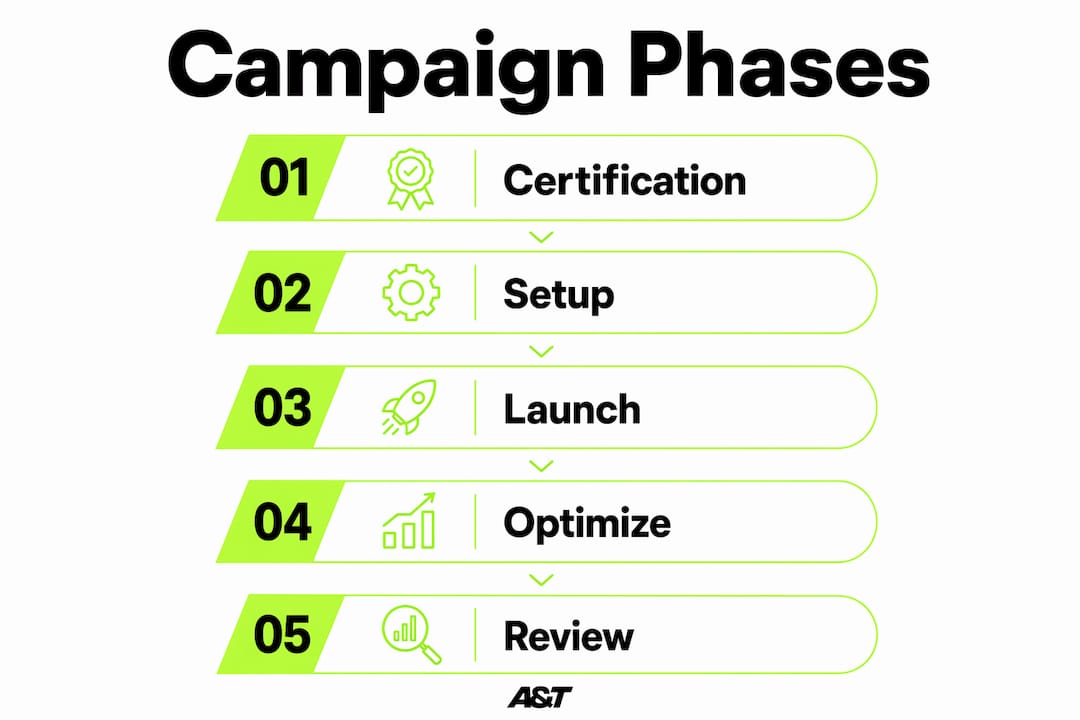
Effective telehealth advertising campaigns follow a defined sequence. Skipping steps early creates compliance problems and wasted spend later.
-
Apply for LegitScript certification. Submit your application before building any Google campaign for prescription medications. The process takes 4–6 weeks. Use this time to build your campaign structure and creative assets.
-
Audit your landing pages. Every page receiving ad traffic must include medical licensing disclosures, plain-language prescription criteria, and a HIPAA-compliant privacy policy. Fix these before launch, not after disapproval.
-
Structure campaigns by patient intent. Telehealth campaigns require three distinct layers: cold prospecting for new audiences, warm retargeting for site visitors and video viewers, and hot retargeting for patients who started but did not complete intake. Each layer needs different creative and different bidding logic.
-
Set a 14–21 day validation window. Do not judge campaign performance in the first week. Telehealth patient acquisition involves medical approval steps that delay final conversion signals. Use approval-adjusted CAC rather than platform-reported CPA. A target blended CPA below $80 is a reasonable benchmark for most specialties, though this varies by service type.
-
Audit intake capacity before scaling. Scaling ad spend faster than intake capacity wastes budget and damages patient experience. Check provider review times, support ticket volumes, and prescription fulfillment rates before increasing daily budgets.
-
Build HIPAA-compliant, server-side tracking. Standard pixel tracking and GA4 miss medical approval events. Server-side tracking pipelines give you accurate final acquisition costs and better data for budget decisions.
Pro Tip: Track campaign performance beyond platform dashboards. Use your intake system data to calculate true patient acquisition cost, including patients who clicked but did not qualify medically. This number is the one that actually matters for budget planning.
The table below summarizes the key metrics and benchmarks for each campaign phase.
| Campaign phase | Key metric | Benchmark |
|---|---|---|
| Cold prospecting (Google Search) | Cost per click | ~$53.53 |
| Cold prospecting (Meta) | Cost per click | ~$1.92 |
| Warm retargeting | Conversion rate | 11% (Meta healthcare avg.) |
| Full funnel | Blended CAC | Below $80 (most specialties) |
| Validation window | Days before judgment | 14–21 days |
You can also read more about measuring campaign performance beyond platform-reported metrics to build a more accurate picture of patient acquisition cost.
Common mistakes that kill telehealth ad campaigns
Most telehealth campaign failures trace back to a short list of avoidable errors. Knowing them in advance saves weeks of troubleshooting.
- Landing page non-compliance. Missing licensing disclosures, absent privacy policies, or vague prescription criteria are the top causes of Google ad disapprovals. Review every page before launch and after any site update.
- Outcome-based ad copy. Phrases like "get better fast" or "guaranteed relief" violate FTC guidelines. Replace them with process-focused language: "speak with a licensed provider today" or "get evaluated online."
- Scaling before operations are ready. Increasing daily budgets without auditing intake capacity leads to missed patient inquiries, slow response times, and wasted spend. Run a workflow audit first.
- Ignoring creative fatigue on Meta. Running the same ad creative for more than 4–6 weeks on Meta will cause frequency to rise and CTR to fall. Build a creative production pipeline, not just a campaign.
- Using standard e-commerce campaign structures. Telehealth patient journeys include medical review steps that e-commerce funnels do not. Applying standard ROAS-based bidding to telehealth campaigns produces misleading data.
Compliance vigilance does not end at certification. FTC and FDA regulations evolve continuously, and platforms update their healthcare advertising policies without advance notice. Schedule a monthly review of all active ads and landing pages to catch issues before they become disapprovals.
When a campaign gets disapproved, submit a manual review request with your LegitScript certification documentation attached. Platforms respond faster to documented compliance than to generic appeals. Keep your certification status and supporting documents in a shared folder your team can access immediately.
Key takeaways
Telehealth advertising requires LegitScript certification, intent-based campaign structure, and HIPAA-compliant tracking to produce reliable patient acquisition at a measurable cost.
| Point | Details |
|---|---|
| Certify before you launch | LegitScript certification takes 4–6 weeks and is required for Google prescription medication ads. |
| Structure by patient intent | Build separate campaigns for cold prospecting, warm retargeting, and hot retargeting with distinct creatives. |
| Use doctor interviews for cold traffic | Credibility-first formats outperform generic UGC in cold prospecting campaigns. |
| Validate over 14–21 days | Use approval-adjusted CAC, not platform CPA, to judge true campaign performance. |
| Audit operations before scaling | Intake capacity must match ad volume or budget is wasted and patient experience suffers. |
What I've learned from running telehealth ad campaigns
The biggest mistake I see telehealth marketers make is treating paid advertising as separate from clinical operations. It is not. Every patient your ads bring in enters a clinical workflow. If that workflow cannot handle the volume, your cost per acquired patient rises even as your cost per click stays flat. Advertising and operations are the same system.
The second thing I have learned is that compliance monitoring never stops. I have seen well-run campaigns get flagged months after launch because a landing page was updated by a web team that did not know the ad policy rules. Build a review process that includes your marketing team, your compliance officer, and whoever manages your website. All three need to be in the loop.
On the measurement side, I cannot overstate the value of HIPAA-compliant tracking built server-side. Platform dashboards show clicks and form fills. They do not show you which patients completed intake, passed medical review, and became paying patients. That gap between platform data and actual revenue is where most telehealth ad budgets get misallocated. Fix the measurement first, then scale.
Finally, budget allocation should follow patient quality, not volume. A campaign generating 50 qualified patients per month at $70 CAC beats one generating 200 leads at $20 per lead if only 10 of those leads complete intake. Track the full funnel. Optimize for patients, not clicks.
— Ann
Atdigiagency runs telehealth ad campaigns built for compliance and results
Telehealth advertising requires more than running Google and Meta campaigns. It requires platform-specific compliance knowledge, LegitScript coordination, and tracking infrastructure that most in-house teams are not set up to manage alone. Atdigiagency specializes in performance marketing for telehealth providers, handling everything from campaign structure and creative strategy to compliance review and budget optimization. We work across Google Ads and Meta, build intent-based campaign architectures, and measure results against real patient acquisition costs. If you are ready to run campaigns that produce patients, not just clicks, we are the team to call.
FAQ
What is LegitScript certification and do I need it?
LegitScript certification is a third-party verification required by Google before telehealth providers can advertise prescription medications. The application process takes 4–6 weeks, so apply before building your campaigns.
What is the best ad platform for telehealth advertising?
Google Ads is the best platform for high-intent patient acquisition, with a 7.8% conversion rate on search. Meta works best for awareness and retargeting at a lower cost per click.
How long should I wait before evaluating campaign performance?
Use a 14–21 day validation window before drawing conclusions. Telehealth conversions include medical approval steps that delay final acquisition signals beyond what platform dashboards show.
Why do telehealth ads get disapproved?
Most disapprovals come from landing pages that lack medical licensing disclosures, missing HIPAA-compliant privacy policies, or ad copy that makes outcome-based claims prohibited by FTC guidelines.
How do I measure true patient acquisition cost for telehealth ads?
Build a server-side, HIPAA-compliant tracking pipeline that connects ad clicks to intake completions and medical approvals. Platform-reported CPA misses the medical review step and overstates campaign efficiency.