
TL;DR:
- Effective event promotion combines multiple campaign types, such as sponsorship, experiential efforts, and content marketing, for maximum impact.
- Segmentation and personalization, especially based on behavior and intent, significantly improve registration conversion rates.
What are the main types of event promotional campaigns?
The most effective event promotional campaigns fall into eight core categories: sponsorship, experiential, content marketing, influencer collaborations, social media, digital advertising, email marketing, and creative or guerrilla tactics. Each serves a distinct function, and the strongest event marketing strategies blend several of them rather than betting everything on one channel.
Here is a quick breakdown of what each type does:
- Sponsorship campaigns pair your event with brands that co-fund promotion in exchange for visibility and audience access
- Experiential campaigns create immersive, participatory moments that attendees remember and share
- Content marketing campaigns build pre-event authority through blog posts, speaker interviews, and video series
- Influencer campaigns use trusted voices to reach niche audiences faster than paid ads alone
- Social media campaigns drive organic and paid awareness across platforms like Instagram, LinkedIn, and TikTok
- Digital advertising campaigns use paid channels such as Google Ads, Meta Ads, and LinkedIn Ads to target and retarget high-intent audiences
- Email marketing campaigns nurture registered and prospective attendees through segmented sequences tied to behavior
- Creative and guerrilla campaigns use surprise, cultural relevance, and low budgets to generate outsized reach
These types are not mutually exclusive. A conference might run a sponsorship campaign to fund production, a content series to build authority, and a retargeting ad campaign to convert fence-sitters. The goal is an integrated plan where each type amplifies the others.
1. Sponsorship and experiential event marketing campaigns
Sponsorship campaigns: how they actually work
Sponsorship is one of the oldest event promotion techniques, but the mechanics have evolved. Modern sponsorship is less about a logo on a banner and more about co-branded content, shared audiences, and mutual amplification. A sponsor brings budget, distribution, and credibility. In return, your event gives them access to a qualified audience they could not easily reach on their own.
The most effective sponsorship models include:
- Co-branded content where the sponsor produces pre-event material (webinars, whitepapers, social posts) that promotes the event to their own audience
- Sponsored sessions or activations that let the brand own a specific moment inside the event
- Shared email campaigns where the sponsor sends your event to their list with a co-branded message
- Sponsor-driven social amplification using the sponsor's channels to extend reach beyond your own followers
Best practices for sponsorship campaigns:
- Align sponsors with your audience's interests. A cybersecurity sponsor at a developer conference works. The same sponsor at a wellness retreat does not.
- Define deliverables in writing before the event. Vague agreements produce vague results.
- Give sponsors content assets they can actually use. A sponsor who has nothing to post will not post.
- Measure sponsor-driven traffic separately so you can prove ROI for renewal conversations.
Experiential campaigns: earning the share
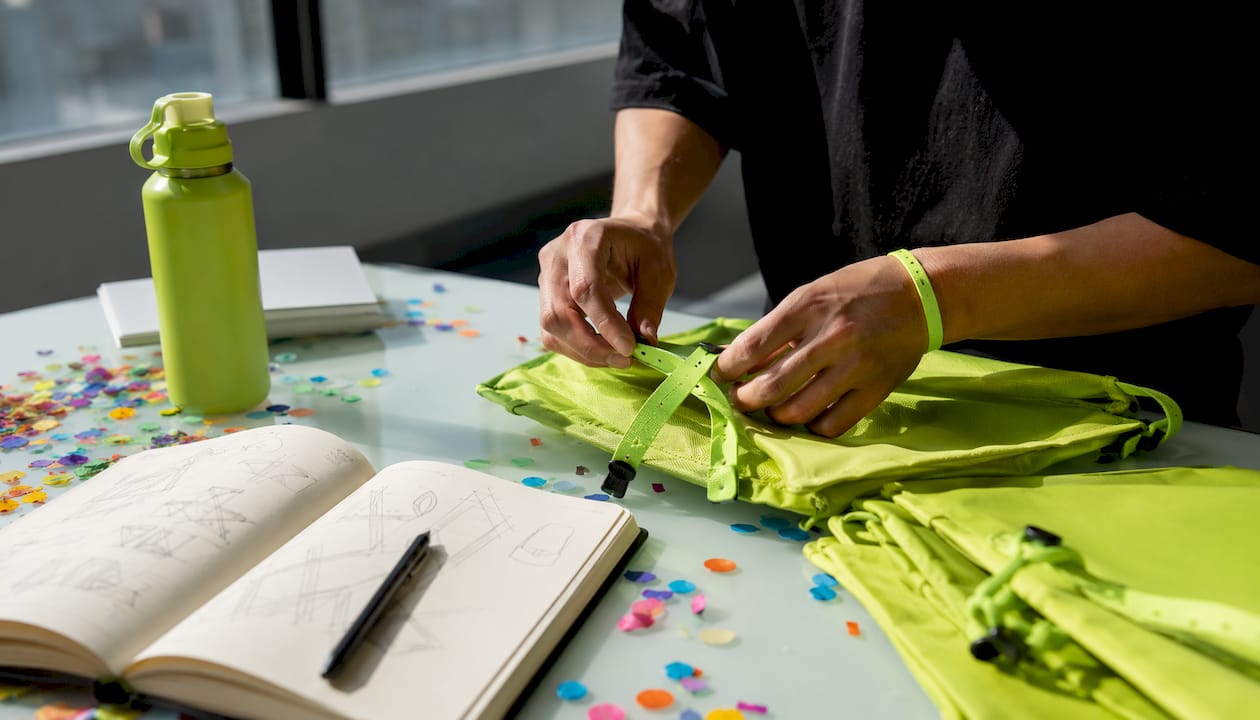
Experiential marketing creates moments that attendees do not just attend but actively participate in. The distinction matters because passive attendance rarely generates social content. When attendees have to earn an experience, whether by completing a challenge, unlocking a secret session, or collaborating on something physical, the emotional investment goes up and so does the shareability.
Real-world examples of experiential campaigns that worked:
- Immersive brand installations at trade shows where attendees interact with a product in a controlled, theatrical environment
- Scavenger hunts tied to event content that reward participants with exclusive access or merchandise
- Live co-creation sessions where attendees contribute to a piece of content or artwork displayed at the event
- Pop-up activations in high-traffic areas near the venue that tease the event experience before doors open
The key principle: design the experience so that documenting it feels natural. If attendees need to be told to post, the activation probably was not compelling enough.
2. Content marketing, influencer collaborations, and social media campaigns
Content marketing: building the audience before the event
Events in 2026 are treated as media launches, blending storytelling with data-driven personalization to build community before ticket sales even begin. That framing changes everything about how you approach content. You are not just announcing an event. You are building a narrative that makes people feel like they are already part of something.
Effective pre-event content tactics include:
- Speaker interview series published as short videos or podcast episodes six to eight weeks out
- Behind-the-scenes content showing event production, venue setup, or team preparation
- Thought leadership articles tied to the event's core theme, published on the event blog and syndicated to LinkedIn
- Countdown content that releases new information (agenda items, surprise guests, exclusive perks) on a schedule to maintain momentum
The goal is not just awareness. Content marketing builds the kind of trust that converts a curious visitor into a registered attendee.
Influencer campaigns: reach the right room
Influencer marketing for events works best when the influencer's audience overlaps precisely with your target attendee profile. Reach alone is not the metric. A micro-influencer with 15,000 deeply engaged followers in your niche will outperform a celebrity with a million passive ones.
How to run an influencer campaign for an event:
- Identify three to five influencers whose audiences match your attendee profile
- Offer them genuine value: complimentary tickets, speaker slots, or exclusive access
- Co-create content rather than issuing a brief. Influencers know their audience better than you do
- Ask for a mix of formats: a long-form post, a story series, and a live session if possible
- Track referral codes or UTM links to measure actual ticket conversions per influencer
Social media campaigns: organic, paid, and UGC
Social media campaigns for events operate on three levels. Organic posting builds community and keeps your existing audience engaged. Paid social extends reach to new audiences who match your attendee profile. User-generated content (UGC) is the most credible layer because it comes from real people, not the event brand.
The most effective social media event promotion techniques combine all three. Start with organic content to warm up your existing audience. Layer in paid promotion to reach new segments. Then actively encourage UGC by creating shareable moments, running contests, and reposting attendee content in real time. Platforms like Instagram and TikTok reward this kind of community-driven activity with organic reach boosts that paid posts cannot buy.
Pro Tip: Create a branded event hashtag before you launch any social campaign. Seed it in your first organic posts, put it on all event materials, and make it short enough that attendees will actually use it.
3. Digital advertising and email marketing campaigns for event promotion
Paid digital advertising: where the conversions happen
Paid digital advertising is the most direct way to drive registrations at scale. The three channels that consistently perform for event promotion are Google Ads, Meta Ads (Facebook and Instagram), and LinkedIn Ads. Each serves a different intent level and audience type.
- Google Ads captures high-intent searchers who are already looking for events like yours. Search campaigns targeting terms like "marketing conference 2026" or "digital summit registration" convert well because the intent is explicit.
- Meta Ads excel at awareness and retargeting. Broad targeting reaches new audiences; retargeting campaigns bring back website visitors who did not convert on the first visit.
- LinkedIn Ads are the right choice for B2B events where job title, company size, and industry matter. The cost per click is higher, but the audience quality for professional events is unmatched.
Paid digital channels like LinkedIn Ads, Google Ads, and retargeting each carry median CTRs between 0.4% and 15%, with costs per registration ranging from $15 to $200 depending on the channel and audience. That spread is wide, which is exactly why testing matters before committing budget.
Retargeting: the campaign most event marketers underuse
Retargeting is the practice of serving ads to people who have already visited your event page, watched a video, or engaged with your content but have not yet registered. These audiences convert at significantly higher rates than cold traffic because they already know who you are. A well-structured retargeting sequence might include a reminder ad at day three, a social proof ad (featuring speaker names or past attendee testimonials) at day seven, and a urgency-based ad (early bird deadline, limited seats) at day fourteen.
Email marketing: your highest-ROI channel
Professional event marketing budgets often allocate approximately 50% to compounding channels like email and attendee advocacy, 30% to paid acquisition, and 20% to content and creative production. That 50% figure reflects what experienced event marketers already know: email converts better than almost any other channel when it is done right.

The key is segmentation. A first-time visitor to your event page should receive a different email sequence than someone who registered last year. Behavior-based triggers, such as opening an email but not clicking, clicking but not registering, or registering but not booking a hotel, allow you to send the right message at the right moment rather than blasting everyone with the same content.
Effective email campaign structure for events:
- Announcement email (8–10 weeks out): introduce the event, lead with the strongest hook (keynote speaker, exclusive content, limited seats)
- Value-building sequence (weeks 6–4): share speaker spotlights, agenda previews, and attendee testimonials from past events
- Urgency emails (weeks 3–1): early bird deadlines, seat availability updates, last-chance messaging
- Pre-event logistics email (3–5 days out): practical details that reduce friction and increase show-up rates
- Post-event follow-up (within 48 hours): thank-you note, session recordings, and next-event announcement
Statistic callout: Peer-driven channels like attendee advocacy generate 3–5x higher conversion rates per dollar than cold paid traffic, making referral and advocacy programs one of the highest-ROI investments in any event marketing budget.
4. Creative and guerrilla marketing tactics to enhance event promotion
What guerrilla marketing actually means for events
Guerrilla marketing is not just "doing something weird." It is the deliberate use of surprise, cultural relevance, or unexpected placement to generate attention that paid media cannot buy. For events, it usually means activating in spaces where your audience already is, before they are thinking about your event, and making them stop.
The tactics that work best share three traits: they are easy to document on a phone, they connect to something the audience already cares about, and they feel authentic rather than corporate.
Effective guerrilla and creative event promotion tactics:
- Ambush activations near competing events or high-traffic venues where your audience gathers
- Street art or chalk installations in areas your audience frequents, tied to the event's theme
- Unexpected pop-ups in coffee shops, transit hubs, or co-working spaces with a clear event connection
- Stunt-based social content designed to look organic and blend into user-generated streams
- Cultural hijacking that connects your event to a trending moment in a way that feels earned, not forced
Lidl's Oasis campaign: the benchmark for ambush marketing
The clearest recent example of guerrilla marketing done right is Lidl's campaign around the Oasis reunion tour. Rather than paying for official sponsorship, Lidl launched a fashion brand to hijack the cultural moment, reaching over a billion impressions and generating hundreds of thousands of purchase attempts with limited spend. The campaign outperformed official competitors who had paid for the rights.
What made it work was authenticity. The content looked like something a fan would create, not a brand. It blended into the organic conversation around the tour rather than interrupting it.
Pro Tip: When planning a guerrilla campaign, shoot your content on a phone, not a professional camera. Polished production signals "brand," which kills the organic feel that makes these campaigns spread.
Why "earning" the experience changes everything
Creative experiential campaigns that require effort from attendees, such as solving a puzzle to unlock a venue location or completing a challenge to receive an invitation, generate far more social content than passive activations. The effort creates a story. People share things they worked for because it reflects on them. Design your activation so that getting in is part of the experience.
5. How to plan and execute a successful event promotional campaign
A successful event promotional campaign follows a phased timeline. Skipping phases or compressing them is the most common reason campaigns underperform. Each phase has a distinct job, and the channels you use in each phase should match that job.
The five-phase event marketing timeline
Event promotional campaigns follow phased timelines that typically include foundation, launch, momentum, final push, and post-event follow-up. Here is what each phase requires:
Phase 1: Foundation (10–12 weeks out)
- Define tiered goals: primary conversion target (registrations), leading indicators (email sign-ups, page visits), and quality metrics (attendee profile match)
- Build your audience lists: past attendees, email subscribers, social followers, and lookalike audiences for paid campaigns
- Set up tracking: UTM parameters, conversion pixels, and a registration dashboard
- Align stakeholders: sponsors, speakers, and internal teams on messaging and timelines
Phase 2: Launch (8–10 weeks out)
- Announce the event across all channels simultaneously
- Activate early bird pricing to create urgency and generate initial registration data
- Launch the first content pieces: speaker announcements, event theme content, and the first email in your nurture sequence
Phase 3: Momentum (4–7 weeks out)
- Publish the content series: speaker interviews, agenda reveals, and behind-the-scenes material
- Activate paid advertising campaigns with audience data from Phase 2
- Launch influencer partnerships with co-created content
- Begin retargeting campaigns for website visitors who have not registered
Phase 4: Final push (1–3 weeks out)
- Shift messaging to urgency: seat availability, final pricing, last-chance deadlines
- Increase paid ad frequency for warm audiences
- Send behavior-triggered emails to non-converters
Phase 5: Post-event follow-up (within 48 hours)
- Send thank-you emails with session recordings and key takeaways
- Publish post-event content: highlight reels, speaker quotes, attendee reactions
- Launch next-event announcement to capitalize on peak engagement
Channel and budget allocation by phase
| Phase | Primary channels | Budget focus |
|---|---|---|
| Foundation | Email list building, organic social | Minimal spend; infrastructure investment |
| Launch | Email, organic social, PR | Early bird promotions, announcement content |
| Momentum | Paid social, content marketing, influencer | 30–50% of total paid budget |
| Final push | Retargeting, paid search, email | 30% of total paid budget |
| Post-event | Email, social, content | Minimal; advocacy and next-event seeding |
Key principle: select 3–4 channels with proven execution before adding complex tactics. Adding more channels before your core ones are working reliably reduces efficiency across the board.
6. How segmentation and personalization sharpen your event campaigns
Why demographic targeting is not enough
Segmentation by attendee behavior and intent, rather than just industry or job title, is what separates high-performing event campaigns from average ones. A VP of Marketing who visited your event page three times and downloaded a speaker bio is a fundamentally different prospect than a VP of Marketing who found you through a paid ad yesterday. Sending them the same email is a waste of both.
Effective segmentation for event promotion goes beyond demographics. The dimensions that actually move conversion rates are:
- Registration stage: not yet registered, registered but not confirmed, confirmed and engaged
- Behavioral signals: page visits, email opens, content downloads, video views
- Intent indicators: searched for event-related terms, visited competitor event pages, attended similar events before
- Engagement recency: active in the last seven days versus dormant for three weeks
Building nurture sequences per segment
Once you have defined your segments, the messaging changes significantly. Here is how a behavior-based nurture sequence might differ across three core segments:
- Cold prospect (first-time page visitor, no prior engagement): lead with social proof and the event's core value proposition. Make the case for why this event is worth their time before asking for a registration.
- Warm prospect (multiple page visits, email subscriber, has not registered): address the hesitation. Offer a specific reason to act now, whether that is early bird pricing, a speaker they have shown interest in, or a peer who is attending.
- Registered attendee (confirmed but not yet engaged): shift from selling to preparing. Send agenda previews, networking tips, and logistical details that increase show-up rates and pre-event excitement.
Practical segmentation tactics:
- Use UTM parameters to track which channel brought each visitor and tailor follow-up accordingly
- Tag email subscribers based on which content they have engaged with (speaker content vs. agenda content vs. pricing pages)
- Build ad audience segments based on website behavior, not just demographic filters
- Create separate landing pages for different audience segments so the message matches the source
- Use personalized ad strategies that reflect where each segment is in the decision process
The payoff for this kind of segmentation is not marginal. When messaging matches where a prospect actually is in their decision process, conversion rates improve across every channel. Email open rates go up because the subject line is relevant. Ad click-through rates improve because the creative speaks to a real hesitation. Registration rates climb because the offer matches the moment.
Pro Tip: Start with three segments maximum. Cold, warm, and registered. Get those sequences working before you build out more granular tiers. Complexity before consistency is the fastest way to burn budget.
Atdigiagency runs paid event campaigns that actually convert
Most event teams spend weeks building a campaign plan and then lose registrations because the paid advertising execution does not match the strategy. That is the gap Atdigiagency closes.
We specialize in performance marketing for events, running Google Ads, Meta Ads, and multi-channel paid campaigns that are built around your registration goals, not vanity metrics. Our team handles strategy, creative development, audience segmentation, and ongoing optimization, so your budget goes toward what converts. We have driven results across telehealth, entertainment venues, health and wellness, and retail, and we bring that same data-driven execution to event campaigns of every size. No unnecessary meetings. No bloated retainers. Just campaigns that move the number that matters: registrations.
Key Takeaways
The most effective event promotional campaigns combine multiple campaign types, with email and advocacy channels typically anchoring the budget while paid advertising drives scalable reach.
| Point | Details |
|---|---|
| Eight core campaign types | Sponsorship, experiential, content, influencer, social media, digital ads, email, and guerrilla tactics each serve a distinct role. |
| Budget allocation | Experienced event marketers allocate approximately 50% to email and advocacy, 30% to paid acquisition, and 20% to content and creative. |
| Peer-driven channels | Attendee advocacy generates 3–5x higher conversion rates per dollar than cold paid traffic. |
| Segmentation over demographics | Behavior and intent-based segmentation outperforms demographic targeting for email and paid ad campaigns. |
| Atdigiagency | Runs Google Ads, Meta Ads, and multi-channel paid campaigns built around event registration goals with data-driven execution. |